

What to Prepare Before an OEM & ODM Vaporizer Hardware Project
Prepare a clearer OEM and ODM vaporizer hardware brief by organizing product direction, application inputs, branding references, sample priorities, quantities, timing, and manufacturing handoff requirements.
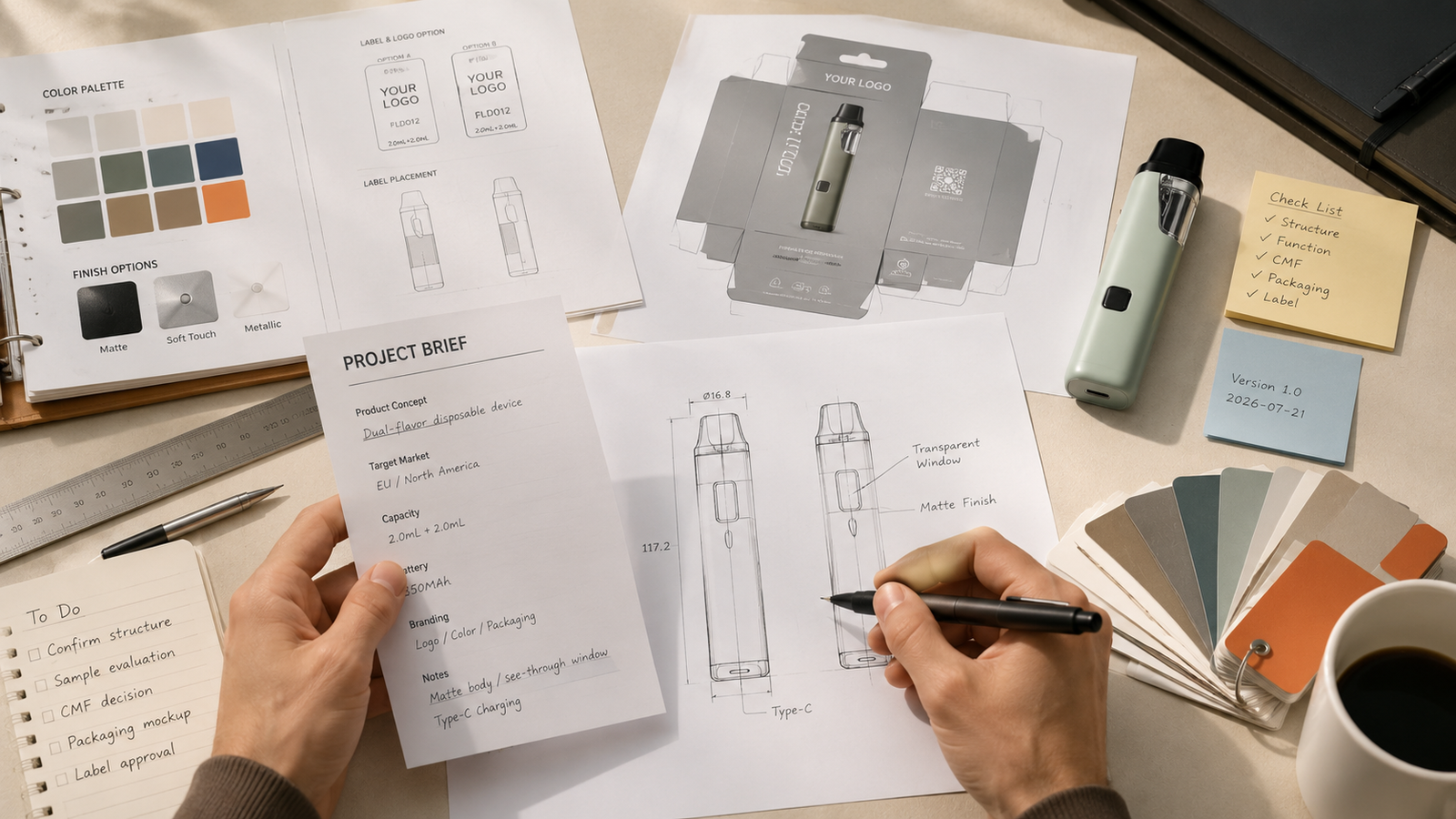
An OEM or ODM vaporizer hardware project moves more efficiently when the buyer prepares a clear brief before requesting samples or production planning. The brief should connect the intended market, hardware format, available application information, brand direction, packaging needs, evaluation priorities, target quantity, and timing. FUNLE supplies empty, unfilled hardware platforms only. It does not supply oil, nicotine, CBD, THC, or any consumable formulation. Customers or their authorized local partners remain responsible for filling, closure, final assembly where applicable, labelling, and local regulatory obligations. Early preparation helps both teams identify open questions without relying on unsupported compatibility or performance assumptions.
Define the Product and Market Direction
Start by identifying the intended hardware category, target market, expected user interaction, and commercial positioning. Clarify whether the project concerns empty all-in-one oil vaporizer hardware, 510 thread batteries, empty 510 cartridges, or another hardware platform. Include the expected sales channel and any market-specific design constraints that the hardware team should consider, while keeping final legal and regulatory decisions with qualified local advisers.
Prepare Application and Hardware Requirements
Provide the application information that is genuinely available, together with the preferred device format, filling and closure workflow, battery and cartridge pairing needs, and handling expectations. Do not assume universal compatibility or guaranteed performance. Missing data should be recorded as an evaluation question so that candidate hardware can be reviewed through samples and product-specific information rather than broad claims.
Organize Branding and Packaging References
Prepare brand assets, colour references, finish preferences, logo placement ideas, packaging format, required label areas, and any existing visual guidelines. Separate essential requirements from optional preferences. Customers or their authorized local partners are responsible for final labels, market-facing statements, and local compliance, so packaging discussions should clearly identify which party owns each deliverable and approval.
Clarify Sample and Validation Priorities
Define what the sample round must help the project team learn. Priorities may include physical fit, interface clarity, charging behaviour, filling and closure handling, packaging fit, storage observations, or the intended battery-cartridge combination. Document test conditions and acceptance criteria without using absolute leak-proof, compatibility, safety, medical, health, or performance guarantees.
Plan Quantity, Timing and Manufacturing Handoff
Share realistic volume ranges, target milestones, destination markets, packaging responsibilities, and the decisions required before manufacturing handoff. The schedule should allow time for sample review, revisions, artwork confirmation, production planning, inspection, and delivery coordination. Final quantities, specifications, lead times, and commercial terms should be confirmed against the selected hardware and approved project documents.
Prepare a Focused Project Brief
CTA framework: Bring your hardware direction, available application inputs, branding references, sample questions, quantity range, and timing goals into one project brief. FUNLE can then review relevant empty, unfilled hardware options and help organize the next sample and manufacturing-planning discussion.